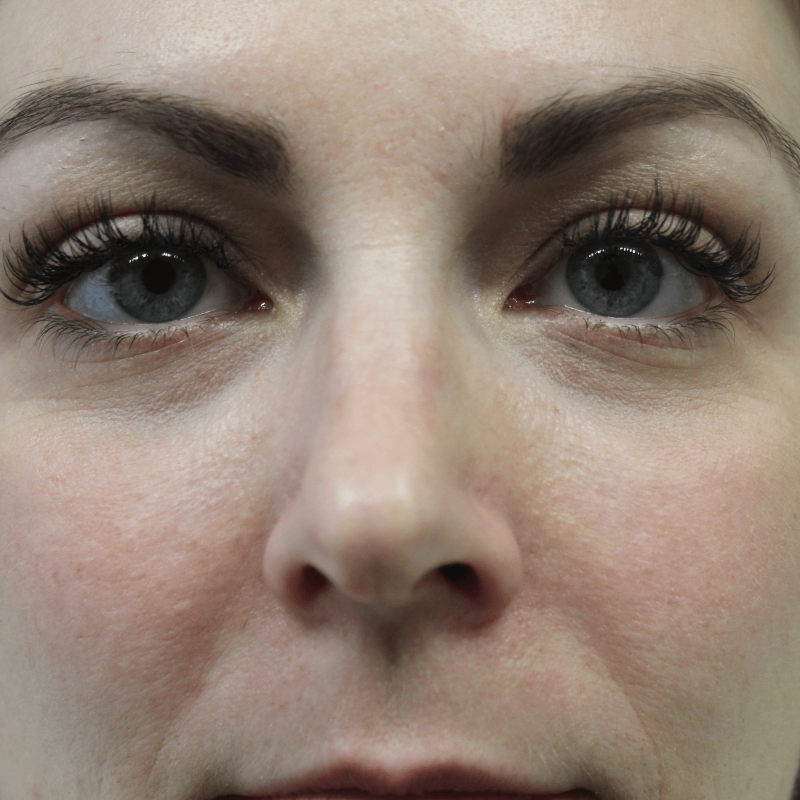
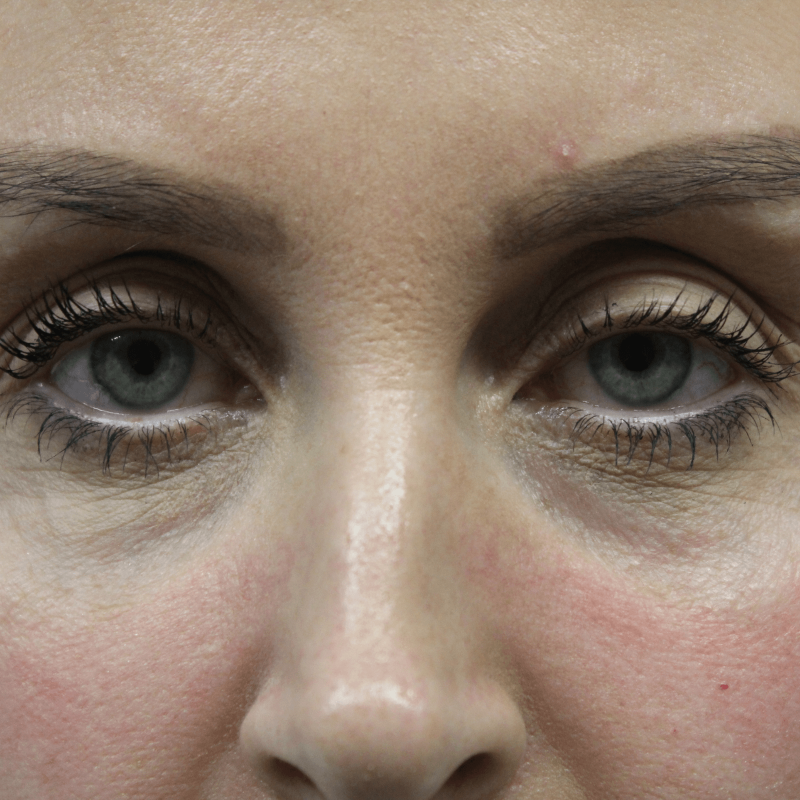
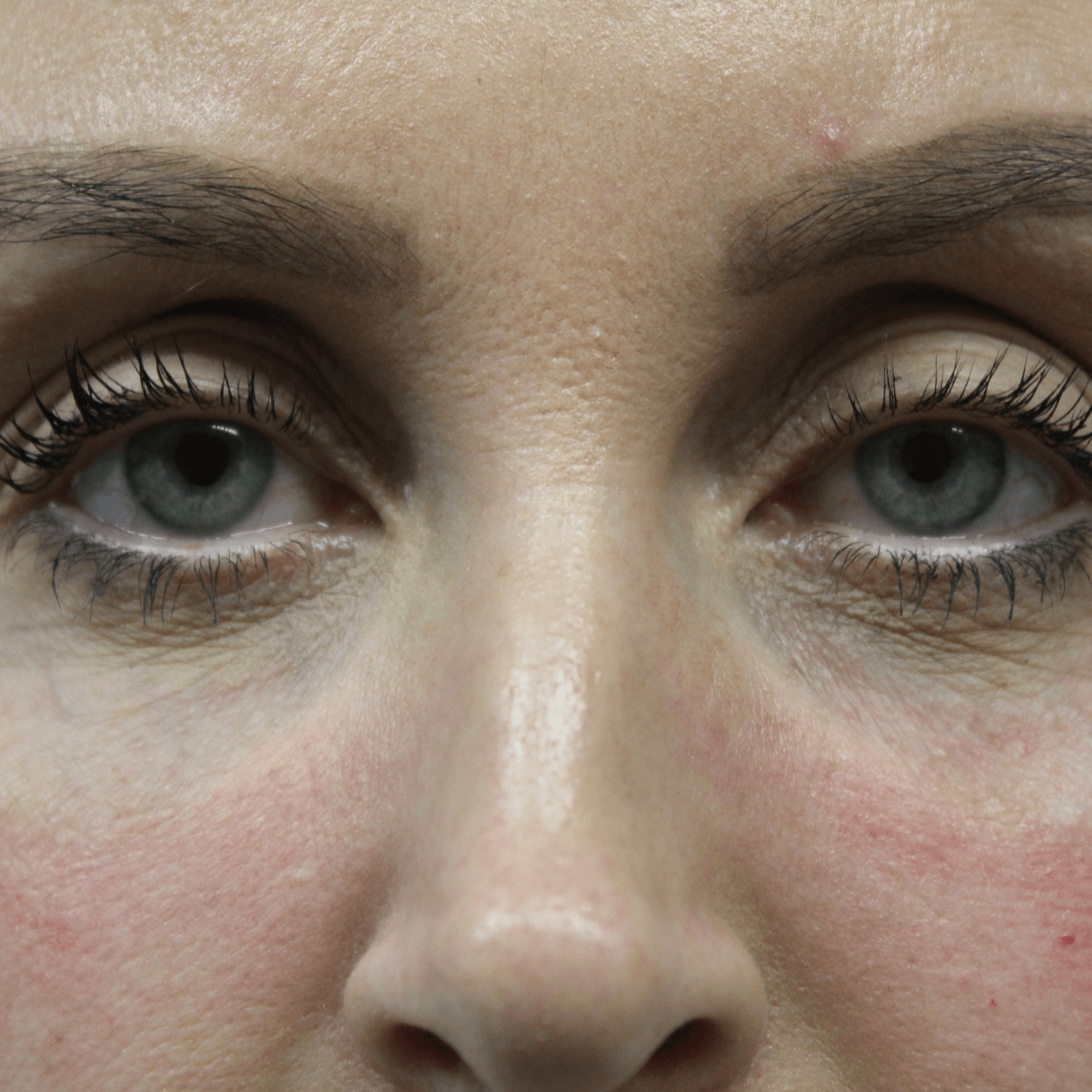
Tear Trough Filler Overview
Tear trough filler is a form of under-eye filler that uses hyaluronic acid to restore volume in the hollow between the lower eyelid and cheek. This hollow creates the shadow patients often mistake for pigmentation-based dark circles. Patients often come to Array asking about dark circles treatment in Belfast when the cause is hollowing rather than pigmentation, and tear trough filler is the right answer. At Array we use Belotero, manufactured by Merz Aesthetics, because its rheological properties allow it to integrate smoothly into the delicate under-eye tissue while maintaining a soft, natural appearance.
How Tear Trough Filler Works
Tear trough filler is placed deep beneath the skin using a blunt cannula rather than a needle, reducing bruising and vascular risk in an area with delicate anatomy. The hyaluronic acid is deposited at a specific plane between the muscle and the underlying bone, restoring lost volume without adding puffiness at the surface. Treatments take around forty minutes including preparation and cannula entry point numbing. Results are visible immediately, with swelling settling over the following week and the final outcome apparent at two weeks.
Choosing Tear Trough Filler
Tear trough filler is a highly technique-sensitive treatment. Candidacy matters more here than in almost any other injectable area: patients with true volumetric hollowing tend to do well, while those with pigmentation-driven dark circles, festoons or significant fluid retention often do not. Because the anatomy beneath the eye is particularly delicate, Dr Chris Hutton personally assesses every patient before recommending treatment. Occasionally the right recommendation is to defer treatment, choose a different approach, or refer for surgical consultation instead. That honesty tends to produce the most natural long-term result.
Tear trough filler at Array is led by co-founder Dr Chris Hutton (GMC: 7039324), an experienced lead injector and Merz Aesthetics training partner, with surgical eye-area referral available through our consultant oculoplastic surgeon Mr Konstantinos Kopsidas.
Tear Trough Filler vs. Other Treatments
Tear trough filler is one of several approaches to the under-eye area, each addressing a different underlying concern. Polynucleotides under the eye improve skin quality, hydration and thickness but do not restore lost volume. Skin boosters such as Profhilo work at the wider midface but are not injected at the tear trough plane. Lower blepharoplasty is a surgical procedure that repositions fat compartments rather than replacing volume, and is more appropriate for patients with fat herniation or significant excess skin.
You are a candidate for tear trough filler if your concern is a true volumetric hollow beneath the eye, without significant fluid retention, festoons or bulging fat compartments. Polynucleotides may suit if the concern is thin, crepey skin quality. Lower blepharoplasty is appropriate when the concern is fat herniation, excess skin or a combination that filler cannot address.
Complementary Treatments
Tear trough filler is often combined with other treatments that address the wider eye area. Polynucleotides can be added to improve the thin skin of the lower eyelid, while cheek filler may be sequenced first if midface volume loss is contributing to the under-eye shadow. Anti-wrinkle injections around the eye can soften dynamic lines that filler does not address. Your clinician will plan these in sequence at consultation, so each treatment builds on the last rather than layering unnecessary product.
What It Treats
Tear trough filler treats volumetric hollowing between the lower eyelid and cheek, and the anatomical shadows this hollowing casts across the under-eye area. It does not treat pigmentation-driven dark circles, festoons, malar bags, fat herniation or fluid retention, all of which need different treatments or surgical referral to address properly.
Treatment Areas
Tear trough filler is placed within the tear trough itself, the depression that runs from the inner corner of the eye toward the cheek. It may occasionally be extended into the palpebromalar groove or upper cheek to soften the transition between the eye and midface, depending on your anatomy.
Benefits
A well-planned tear trough treatment produces immediate softening of under-eye shadows and a rested, less tired appearance without changing the shape or expression of the face. Results are best assessed at two weeks once initial swelling settles. Hyaluronic acid tear trough filler is fully reversible if adjustment is needed.
What to Expect
A topical anaesthetic is applied before treatment. A blunt cannula is inserted through a small entry point and used to place filler at the correct depth. Most patients describe the treatment as pressure with minimal pain. Some swelling and occasional bruising is normal, settling over the following week.
Safety and Side Effects
Tear trough filler carries higher clinical risk than most facial fillers due to proximity to the ophthalmic artery. Common side effects are short-lived swelling and bruising. Rarer complications include Tyndall effect, malar edema and, very rarely, vascular occlusion. Array carries hyaluronidase for immediate reversal and offers ultrasound-guided filler dissolve for complex complication management.
Aftercare
Avoid rubbing or pressing on the treated area for forty-eight hours, and skip strenuous exercise, saunas and hot showers for twenty-four hours. Sleep on your back for the first night. Bruising, if it occurs, settles over one to two weeks. Contact the clinic for any unusual pain or vision changes.