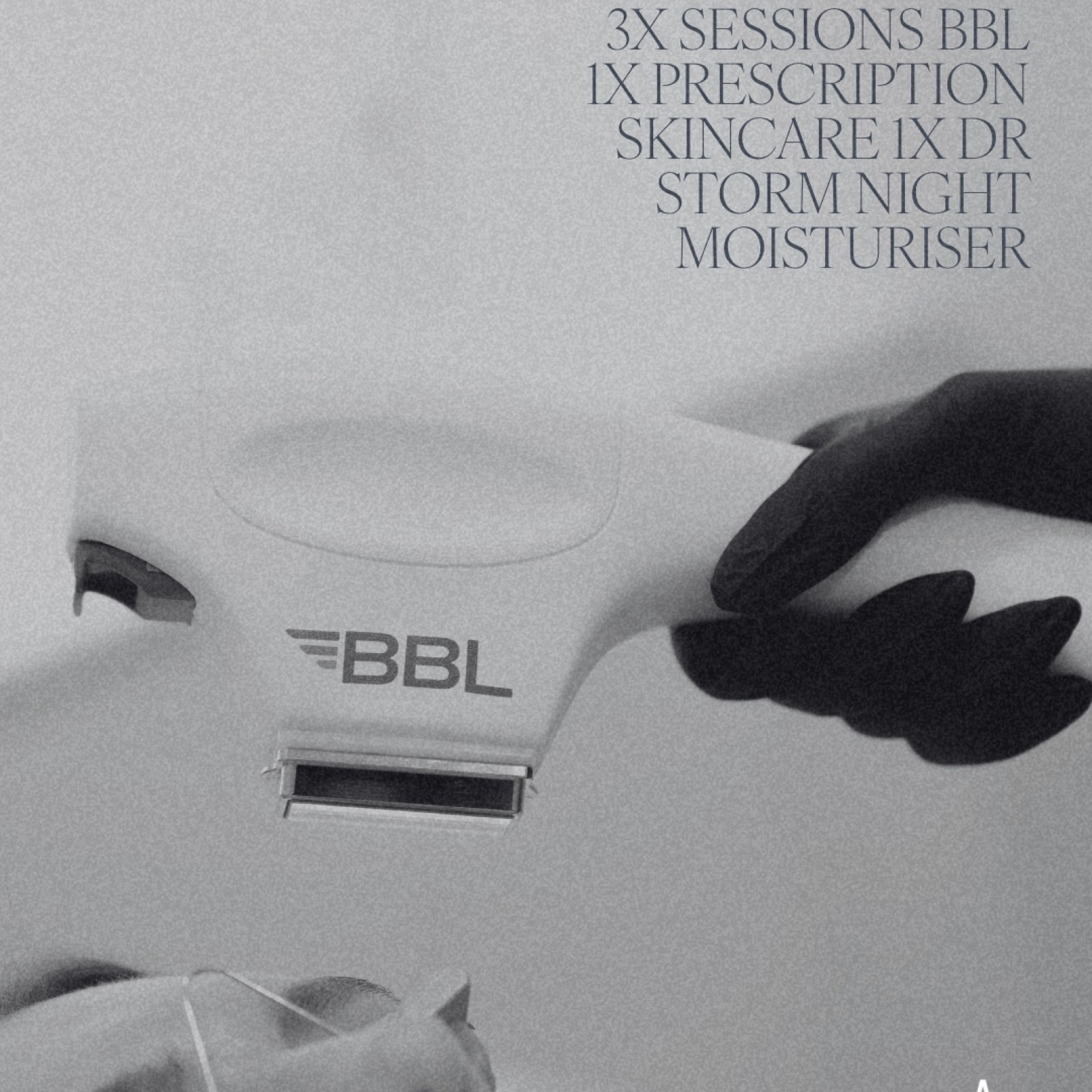
TL;DR BBL laser treatment uses precisely filtered pulses of visible light to address pigmentation, redness, and the visible signs of sun damage, without surgery and without significant downtime. BBL in Belfast is most often delivered at Array Aesthetics on the Sciton BBL platform, inside a doctor-led, RQIA-regulated clinic. Most patients complete a course of three sessions spaced three to four weeks apart, with the skin looking clearer, more even, and noticeably brighter as the course progresses.
Understanding BBL laser treatment
BBL stands for BroadBand Light, Sciton's medical-grade evolution of intense pulsed light technology. What sets it apart from earlier IPL devices is the level of clinical control it offers, allowing the practitioner to select specific wavelengths, pulse durations, and skin-cooling parameters for each patient. The result is a treatment that can be calibrated to the skin in front of the clinician, rather than delivered as a fixed protocol.
A BBL laser treatment is often described as a photofacial because the device works through light rather than a single focused beam. Pigment particles, dilated capillaries, and inflamed tissue absorb the light energy selectively, while the surrounding skin is left undisturbed. That precision is the reason broadband light has become a foundation treatment in medical skin rejuvenation, and the reason it pairs well with other modalities for patients pursuing comprehensive skin rejuvenation.
How a BBL photofacial works
The science underpinning a BBL photofacial is a principle called selective photothermolysis. Filtered light is absorbed by specific chromophores within the skin, primarily melanin in sun-induced pigmentation and haemoglobin in visible blood vessels. The targeted structures heat briefly, then resolve through the body's natural processes. Pigment lifts and exfoliates over the following days. Capillaries coagulate and gradually clear from view. In deeper layers, controlled thermal energy supports fibroblast activity, contributing to ongoing collagen turnover and skin quality improvements.
Peer-reviewed clinical research has reported that regular broadband light treatments are associated with measurable changes in the expression of genes linked to younger skin biology, offering a scientific basis for what patients consistently describe after a full course: skin that looks brighter, behaves better, and ages more gracefully.
What BBL laser treatment addresses
A BBL laser treatment is most useful for the visible markers of photoageing. These include sun-induced pigmentation, age spots, freckling, diffuse facial redness, broken capillaries, mild rosacea, and the cumulative dullness that follows years of sun exposure. It is also used to support certain presentations of post-inflammatory pigmentation and mild acne, where the light has a clarifying, anti-inflammatory effect.
It is worth being clear about what BBL is not designed to do. Broadband light does not erase established lines, restore lost volume, or lift sagging skin. Where those concerns dominate, the conversation will move toward injectables, energy-based skin tightening, or laser resurfacing, all of which sit within the wider Array treatment menu. A consultation establishes which approach, or which combination, is best suited to the individual.
The BBL photofacial experience at Array Aesthetics
A BBL laser treatment at Array Aesthetics begins with a structured skin assessment, where the practitioner reviews the patient's concerns, examines the skin, and confirms suitability for broadband light. Wavelength filters, energy settings, and cooling parameters are then selected for that patient specifically.
Cool gel is applied across the treatment area to protect the skin and improve light delivery. Protective eye shields are worn throughout. The treatment itself involves a sequence of brief light pulses across the face, neck, or décolletage, with most patients describing the sensation as a quick, warm flick against the skin. A full-face BBL photofacial typically takes around thirty minutes.
Following the session, the skin often appears flushed and warm for a short period, and existing pigmentation may darken before it lifts away over the next several days. This is part of how the treatment works rather than an unwanted reaction. Most patients return to their day directly from the clinic. A standard course is three BBL laser treatment sessions spaced three to four weeks apart, with periodic maintenance to preserve results.
BBL pricing in Belfast
Pricing for BBL in Belfast is published openly at Array Aesthetics so patients can plan their care with confidence. Current pricing is set out below.
Face
Single session £350 | Course of three £1,000
Face, neck and décolletage
Single session £700 | Course of three £2,000
Pricing reflects treatment at the single Array Aesthetics clinic on the Lisburn Road, Belfast, and is held against the full pricelist at arrayaesthetics.com. A consultation is required before the first session, and any pricing relating to combined treatment plans will be confirmed at that consultation.
Who is and is not a candidate
BBL laser treatment is suited to most patients with lighter to medium skin tones, typically Fitzpatrick types I to IV, who want to refine pigmentation, reduce redness, and improve overall skin clarity. It works best for those willing to commit to a short course, to protect the skin from sun exposure during the treatment window, and to support results with a considered skincare routine.
There are circumstances where BBL is not the right choice. Recent sun exposure, an active tan, pregnancy, certain photosensitising medications, some presentations of melasma, and deeper skin tones with a higher risk of pigment change all warrant a different approach. In these cases, the clinical team may suggest an alternative such as polynucleotides, Profhilo, or microneedling as a more appropriate starting point. The intention is always the right treatment for the right patient, never simply the treatment that has been requested.
Aftercare that protects the result
Recovery from a BBL laser treatment is straightforward, but the days immediately after each session influence the quality of the final result. Patients are advised to keep the skin cool for the first twenty-four hours, to avoid heat-based activities such as hot showers, saunas, and high-intensity exercise for forty-eight hours, and to apply a high-factor broad-spectrum SPF daily throughout the course and well beyond it. Strong actives such as retinoids and acid exfoliants are paused briefly either side of each session. Written, personalised aftercare is provided by the clinical team at the time of treatment.
Why a doctor-led setting matters
BBL is a medical-grade technology, and that distinction matters more than it sometimes sounds. The same device capable of restoring clarity and refining tone can also cause injury if used at the wrong setting on the wrong patient. Choosing a BBL laser treatment within a doctor-led, RQIA-regulated clinic places those clinical decisions (wavelength, energy, cooling, candidacy) with practitioners trained to make them safely.
Array Aesthetics is a three-time winner of the Best Clinic Ireland & Northern Ireland award at the Aesthetics Awards (2023, 2024, 2026), with a multi-doctor team of consultants, doctors, and nurse prescribers practising alongside one another. The British Association of Dermatologists is clear that energy-based skin procedures should be delivered within an appropriately regulated medical environment, by clinicians qualified to assess, treat, and manage outcomes. That standard is the one Array is built around.
Booking a BBL consultation in Belfast
Anyone considering BBL in Belfast is welcome to begin with a consultation at Array Aesthetics. Our team will assess the skin in person, review relevant medical history, and confirm whether BBL, an alternative, or a combination of treatments will produce the best outcome. Appointments are booked online or by telephoning the Belfast clinic on 028 9457 1840.