What is a non-surgical nose job?
Nose filler consists of hyaluronic acid, a substance that is found naturally in the body. All hyaluronic acid based fillers are completely reversible, one of the greatest benefits to this treatment.

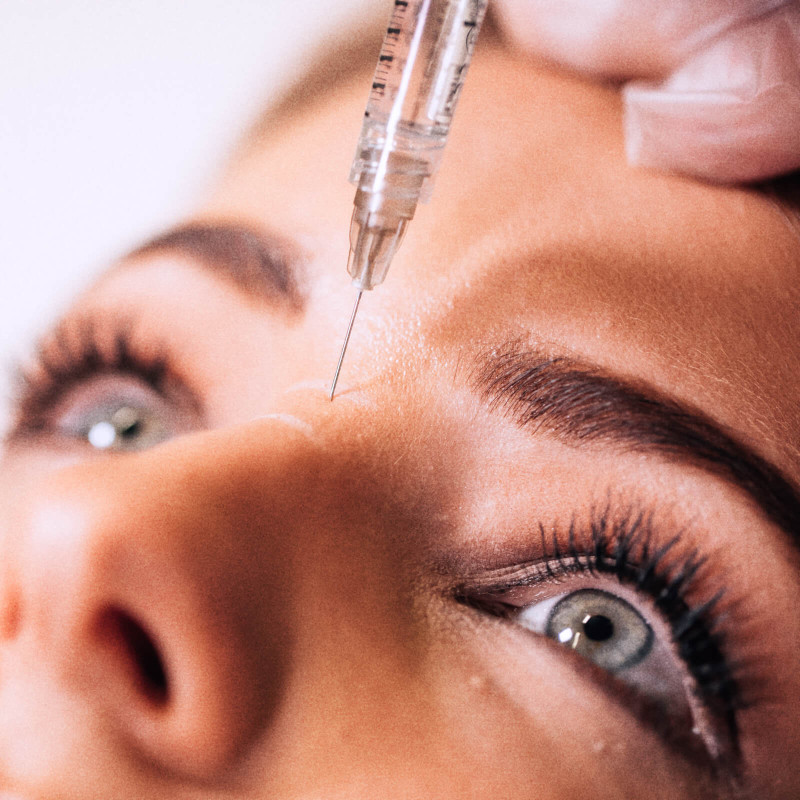
Dermal fillers can be used to improve and refine the shape of the nose. They can straighten bumps on the top and midline of the nose, lift a downturned tip and even make the nose look smaller!
Patients considering surgical intervention to improve the shape of their nose often try a non-surgical approach first, as a ‘tester’. It is not uncommon for patients to subsequently abandon a surgical option due to the fantastic outcomes achievable with non-surgical rhinoplasty!
A non-surgical nose job in Belfast reshapes the nose using dermal filler rather than surgery, refining the profile in a treatment that takes minutes rather than requiring downtime. Small, precise amounts of filler can straighten a bump along the bridge, lift a downturned tip and create a smoother, more balanced line. At Array, it is carried out by Dr Chris Hutton (GMC: 7039324), lead injector for non-surgical rhinoplasty, within a doctor-led clinic regulated by RQIA.
Non-surgical rhinoplasty uses dermal filler, so many patients also look at profile balancing to see how the nose sits with the chin and jawline. If you need filler removed or adjusted, our filler dissolve page explains the process. The price is on our pricelist, Dr Chris Hutton’s credentials are on our team page, and you can browse by concern in our solutions section.
A non-surgical nose job in Belfast reshapes the nose using hyaluronic acid filler rather than surgery. Precisely placed filler can create a straighter-looking bridge, lift a downturned tip and refine the profile in one appointment with minimal recovery, and the result can be dissolved if required. Treatment is performed by Dr Chris Hutton (GMC: 7039324), lead injector for non-surgical rhinoplasty, within Array's RQIA-regulated clinic.
Click or drag the slider upwards or downwards to see more of the before/after image.
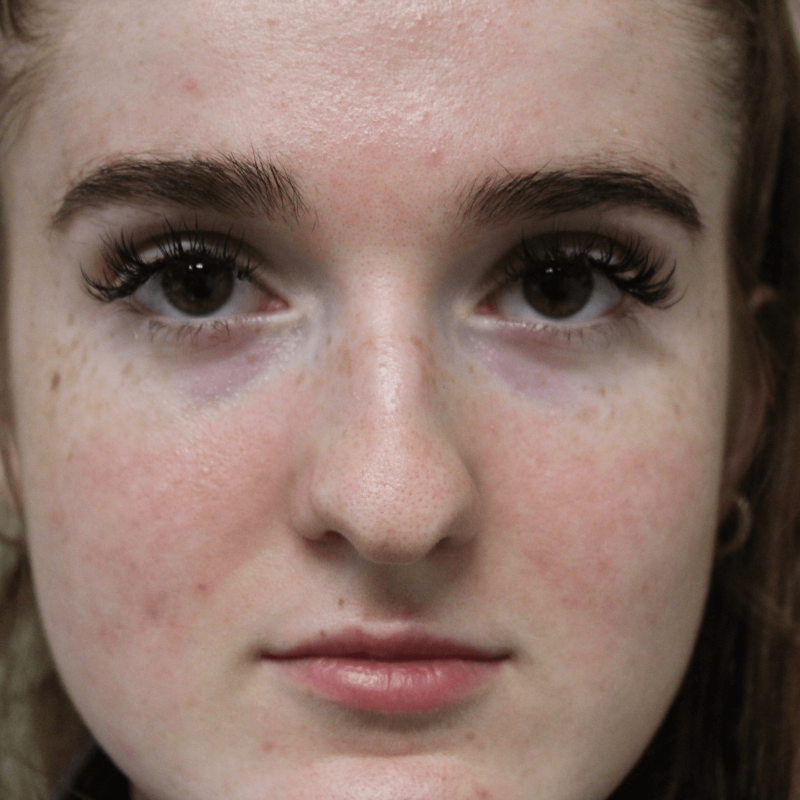 Before
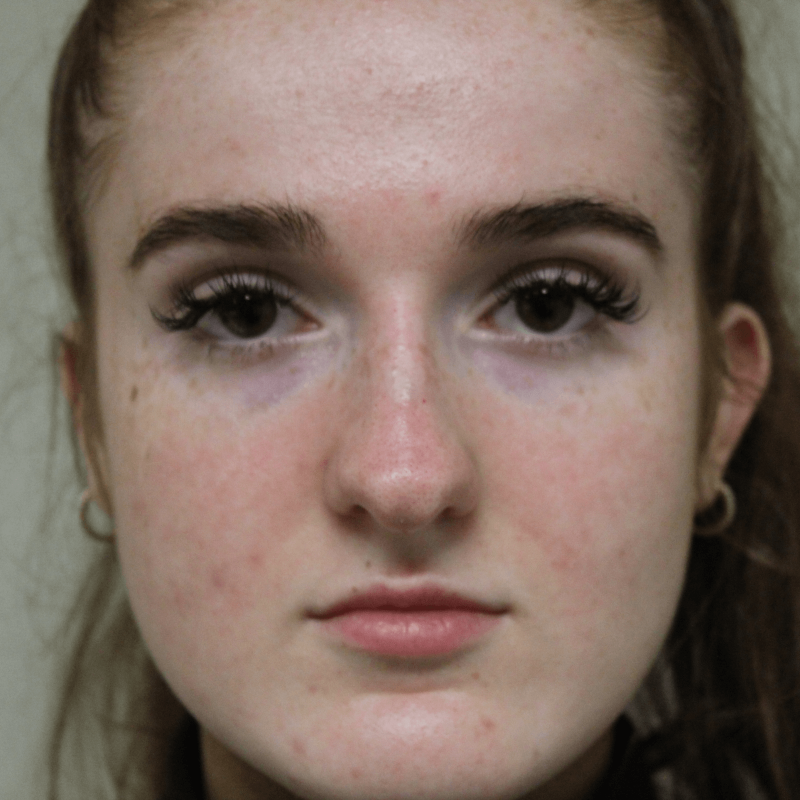 After
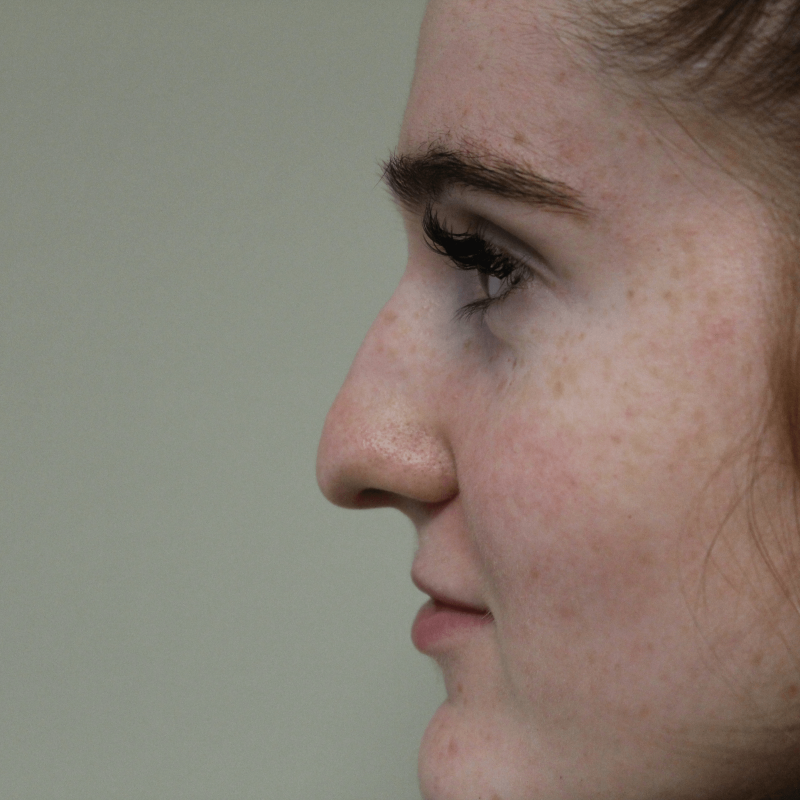 Before
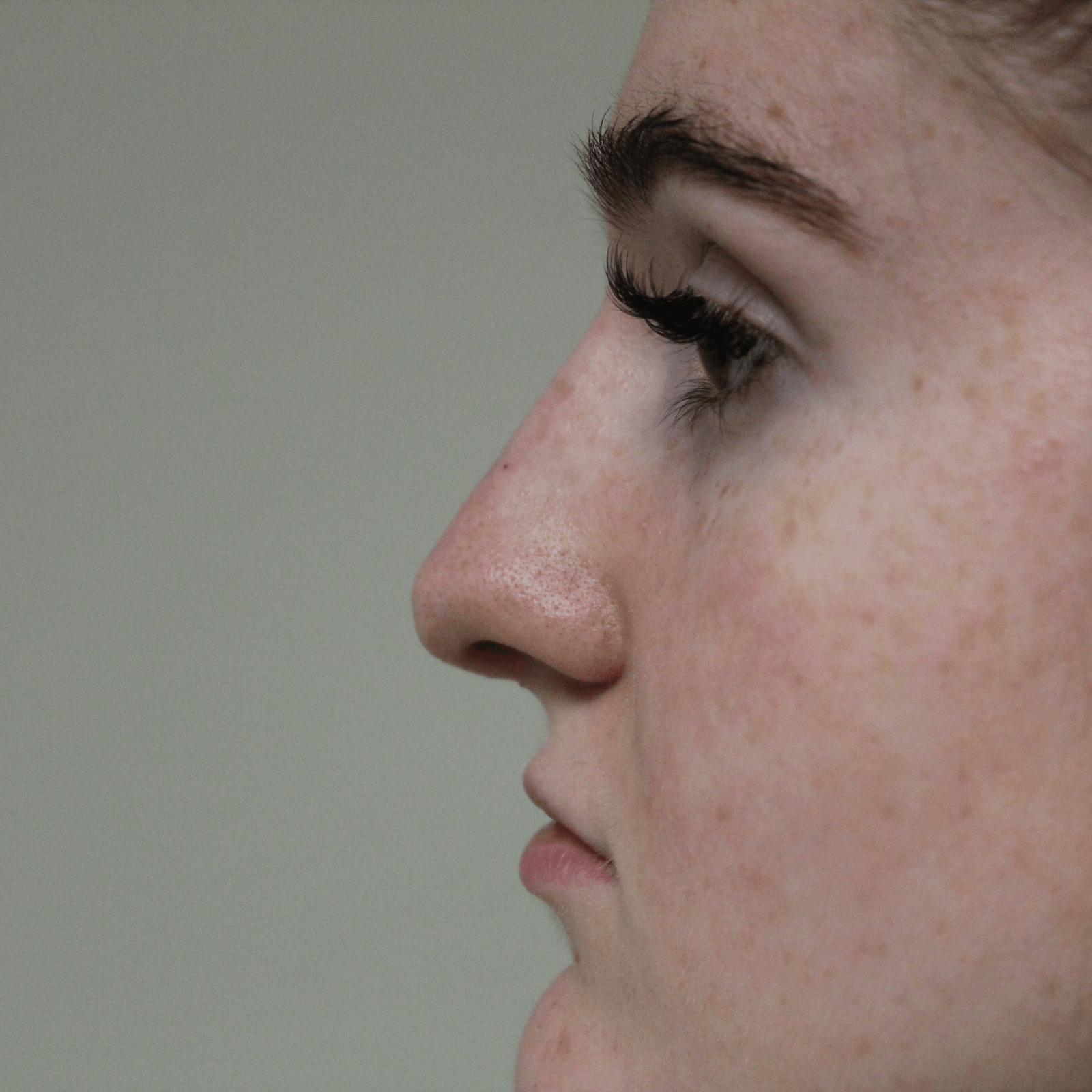 After
The treatment works by addition rather than reduction, which is the key to understanding what it can and cannot achieve. Filler does not remove a bump on the bridge. It builds up the shallower areas around it so the bridge reads as a straighter line, and the same principle supports a tip that has dropped. Clinically it is known as non-surgical rhinoplasty. Consultation at Array begins with an examination of the nose in profile and a discussion of the specific feature the patient wants changed, with the treatment plan agreed before anything is injected.
Filler is placed in small increments at defined points: along the dorsum, at the radix, which is the shallow dip between the brows, at the tip, and at the base of the columella where projection is supported. Placement is deep, against the underlying structure rather than close to the skin surface, and the shape is reassessed between increments rather than built in a single pass. The tissue here is thin and the margin for error narrow, which is why the treatment is incremental. Array uses fillers from the Belotero range, manufactured by Merz Aesthetics.
Suitability depends on what the patient wants changed and whether filler can achieve it. Filler can create a straighter-looking bridge, lift a tip and correct a visible asymmetry. It cannot narrow the nose, reduce its size or improve breathing, and anyone hoping for those outcomes is better served by a surgical consultation. Patients often come specifically to test a shape before committing to surgery, which is a sensible use of a reversible treatment, and some decide afterwards that the surgical step is no longer necessary. Medical history and any previous nasal surgery are reviewed before a plan is agreed.
Non-surgical rhinoplasty at Array is performed by co-founder Dr Chris Hutton (GMC: 7039324), lead injector for the treatment and a trainer and innovation partner with Merz Aesthetics, alongside the clinic's multi-doctor team.
Surgical rhinoplasty is the only procedure that changes bone and cartilage, which makes it the route for reducing size, narrowing the nose or correcting function. The non-surgical version does none of that, and its value sits elsewhere: nothing is permanent, nothing is cut, and the result can be dissolved if a patient changes their mind. Where the imbalance is not actually in the nose, profile balancing treats the chin and jaw so the nose no longer appears prominent by comparison. Anti-wrinkle injections and skin treatments address surface concerns and have no bearing on nasal shape.
The nose is judged against the features around it, which is why treatment is usually planned as part of a wider view of the face. Cheek fillers rebuild the midface structure that frames the nose in profile, and where that volume loss is the real reason a nose looks heavier than it once did, restoring it first reduces how much the nose itself needs. Tear trough fillers address hollowing that sits directly above the treated area. Lip fillers are often sequenced where the lower face is being balanced at the same time. Order and spacing are agreed at consultation.
At Array, experienced medical professionals administer injectables with utmost precision and skill.
During initial consultation, one of Array's medical team examine the nose and discuss patient preferences before agreeing on a treatment plan.
A bump along the bridge, a tip that sits low or drops when smiling, and minor asymmetry that shows in profile. It also softens the impression of size created by an uneven bridge line. It does not treat nasal width, overall size, a deviated septum or difficulty breathing.
The dorsum, meaning the bridge line running from between the brows down to the tip. The radix, the shallow dip at the top of that line, is treated where a bump needs balancing. The tip itself and the base of the columella are used where projection or rotation needs support.
The profile changes in one appointment, with no incisions, no general anaesthetic and minimal recovery. Patients see the result before they leave. Because the material is hyaluronic acid, the outcome is temporary by design and can be dissolved, which makes it a considered way to test a shape before deciding on surgery.
The nose is examined and the plan confirmed before treatment begins. Topical anaesthetic is applied, then filler is placed gradually with the shape checked between increments. Most patients report pressure rather than pain. Mild swelling and occasional bruising are normal and settle over the following few days.
The nose has a complex blood supply, which makes detailed anatomical knowledge and careful filler placement particularly important for safe treatment. Swelling, tenderness and occasional bruising are common and short-lived. Vascular occlusion is rare but serious. Hyaluronidase is kept on site, and ultrasound-guided filler dissolve is available where clinically indicated.
Avoid pressing or massaging the nose for forty-eight hours, and avoid wearing glasses or sunglasses that rest on the bridge during that time. No strenuous exercise, saunas or hot showers for twenty-four hours, and sleep on your back the first night. Report unusual pain, blanching of the skin or visual change immediately.
Nose filler consists of hyaluronic acid, a substance that is found naturally in the body. All hyaluronic acid based fillers are completely reversible, one of the greatest benefits to this treatment.
A non-surgical nose job typically takes 15-30 minutes. There is no significant downtime and patients are typically able to return to normal activities immediately.
Non-surgical nose job treatment lasts 9-12 months on average.
At Array, all patients receive follow up as required. Contact a member of our team at enquiries@arrayaesthetics.com or call 02890918897 to arrange your review appointment.
At Array we use a variety of fillers but mainly Belotero by Merz.
Although treatment for a non-surgical nose job little uncomfortable at times, patients tolerate the procedure very well. The procedure is quick!
Non-surgical rhinoplasty reshapes the nose, and it is often considered alongside treatments that balance the surrounding features so the result reads as harmonious rather than isolated. Tear trough filler addresses hollowing under the eyes, which sits directly above the treated area and influences how rested the mid-face looks. Cheek filler restores structure and projection that frames the nose in profile. Lip filler is a common pairing where patients are balancing the lower face at the same time.
A non-surgical nose job at Array Aesthetics is £500. For patients weighing up a permanent change, the consultation also covers how non-surgical reshaping compares with surgical rhinoplasty, so the decision is made with a clear view of both. The cost of every treatment is set out in the Pricelist.
Filler cannot reduce the size of the nose. Straightening the bridge and lifting the tip changes how light falls across the profile, so the nose can look smaller without being physically altered in size.
Usually, if the concern is a bump, a low tip or asymmetry visible in profile. If you want the nose narrowed or reduced, or you have difficulty breathing, a surgical opinion is the right starting point.
Sometimes. Surgery changes the tissue planes and blood supply of the nose, so Dr Chris Hutton reviews your previous surgery and examines the altered anatomy before deciding whether treatment is appropriate.
The filler breaks down gradually and the nose returns to its original shape, with no lasting change. Most patients choose to repeat treatment at around nine to twelve months.
Yes. Hyaluronic acid can be dissolved using hyaluronidase, which is held at the Belfast clinic. That reversibility is the main practical advantage of reshaping the nose without surgery.