Ultherapy Overview
Ultherapy is a non-invasive skin tightening treatment from Merz Aesthetics that uses micro-focused ultrasound to stimulate collagen and elastin production at the deeper structural layers of the skin. It uses real-time ultrasound visualisation, allowing the clinician to see the tissue layers being treated and confirm treatment depth. Energy is delivered at three depths, including the deep tissue plane surgeons target during a facelift. Because the lift comes from your own collagen renewal rather than repositioned tissue, the result looks like an unaltered version of a rested face rather than a treated one.
How Ultherapy Works
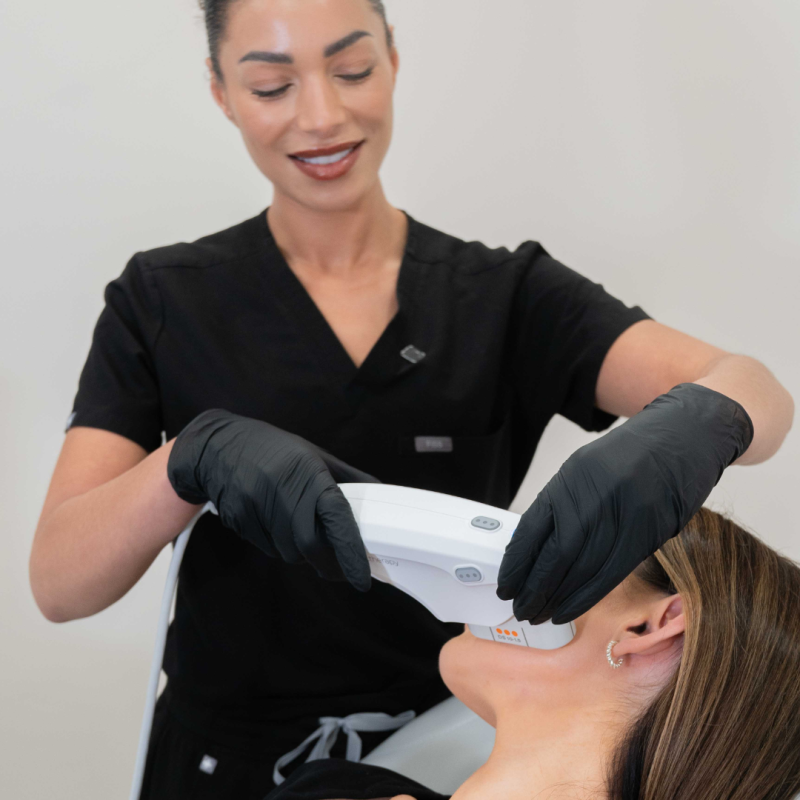
Ultherapy delivers focused ultrasound energy through the surface of the skin to precise depths of 1.5mm, 3mm and 4.5mm. At each depth, small thermal coagulation points trigger a controlled wound-healing response that stimulates new collagen and elastin production. The real-time ultrasound visualisation allows your clinician to see the tissue layers being treated, ensuring energy is delivered accurately to the target depth. Treatments take between thirty and ninety minutes depending on the area, with no downtime and no needles involved.
Choosing Ultherapy
Ultherapy is a non-surgical facelift alternative in Belfast for patients with mild to moderate skin laxity who want structural lifting without incisions. For patients seeking skin tightening in Belfast, Ultherapy offers a way to treat deeper structural laxity without needles while leaving the skin surface intact. Every plan is customised by an experienced clinician, matching transducer lines and depth combinations to your pattern of laxity. Occasionally the right recommendation is to defer treatment or refer for surgical consultation when concerns have moved beyond what focused ultrasound can address.
Ultherapy at Array is delivered by Nurse Practitioner Dominique Shore (NMC: 12J0185N) within a multi-doctor team co-founded by Merz Aesthetics training partner Dr Chris Hutton (GMC: 7039324) and Dr Judith Storm.
Ultherapy vs. Other Treatments
Ultherapy sits alongside Morpheus8 and FaceTite and NeckTite on the non-surgical skin tightening spectrum, but reaches its target depth differently. Morpheus8 uses radiofrequency delivered through fine needles into the deeper dermal layers. FaceTite and NeckTite use radiofrequency under the skin via a small cannula for more pronounced lifting. Ultherapy uses focused ultrasound delivered through the skin surface with no needles at all, reaching the deep tissue plane surgeons target during a facelift. Each has a role depending on the depth, intensity and downtime a patient prefers.
You are a candidate for Ultherapy if your concerns are mild to moderate skin laxity on the brow, lower face, jawline or neck, and you prefer a non-needle option with no planned downtime. Morpheus8 may suit if surface texture is also a concern. FaceTite or NeckTite are more appropriate for more advanced laxity that needs deeper remodelling.
Treatment Details
What It Treats
Ultherapy treats mild to moderate skin laxity on the brow, lower face, jawline and neck, and softens fine lines on the décolletage. It lifts and tightens skin structurally through the patient's own collagen renewal, and is not intended to treat pigmentation, surface texture or advanced sagging that requires surgery.
Treatment Areas
Most patients treat the full face and neck together, which is the most commonly booked Ultherapy combination at Array. The treatment is also delivered as a lower-face course for jowl and jawline concerns, or as a brow lift, décolletage lift, or targeted single-area treatment depending on your priority.
Benefits
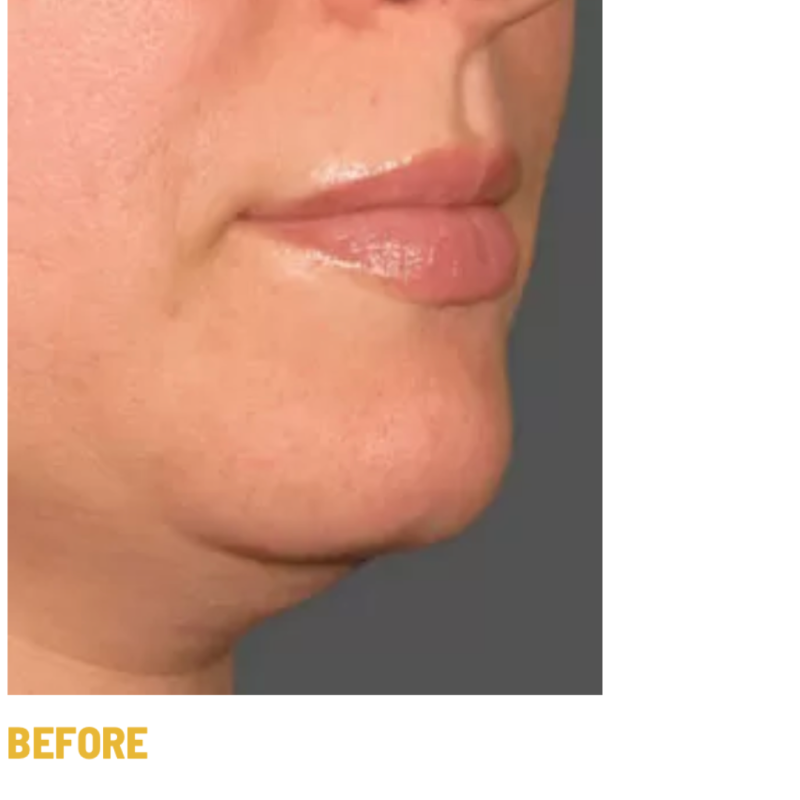
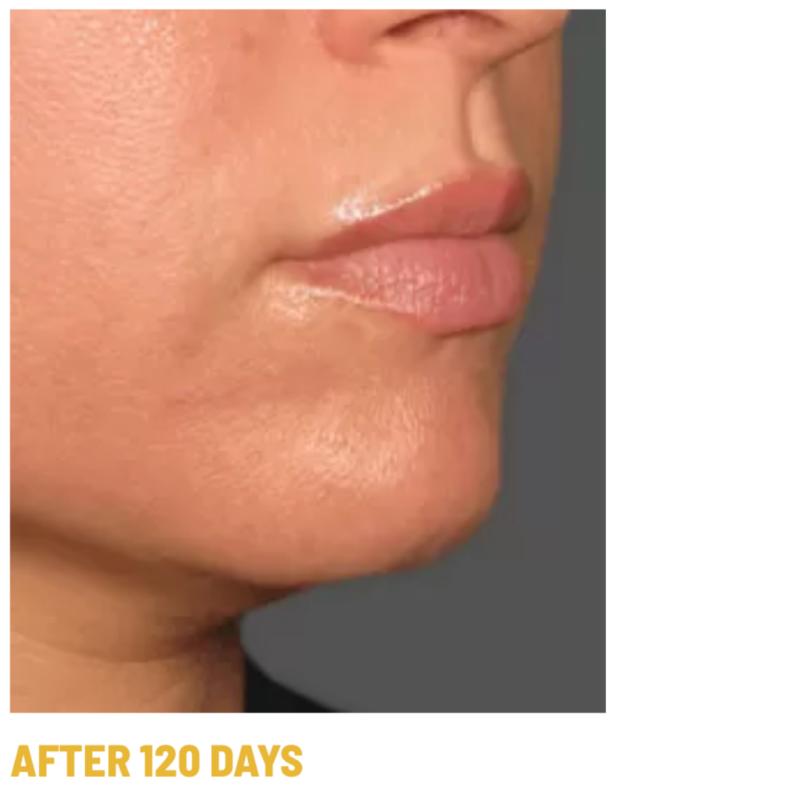
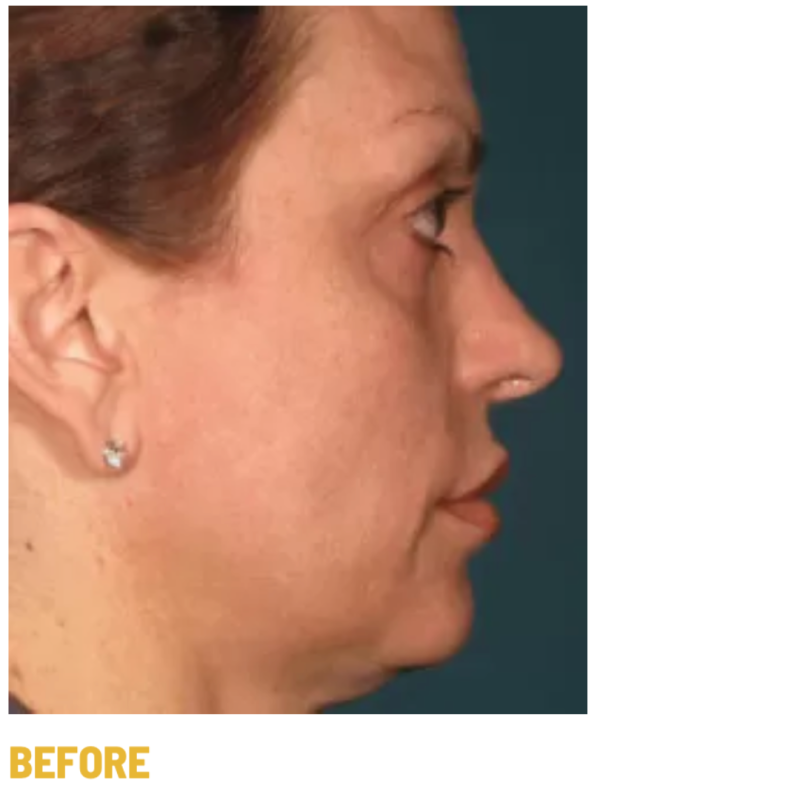
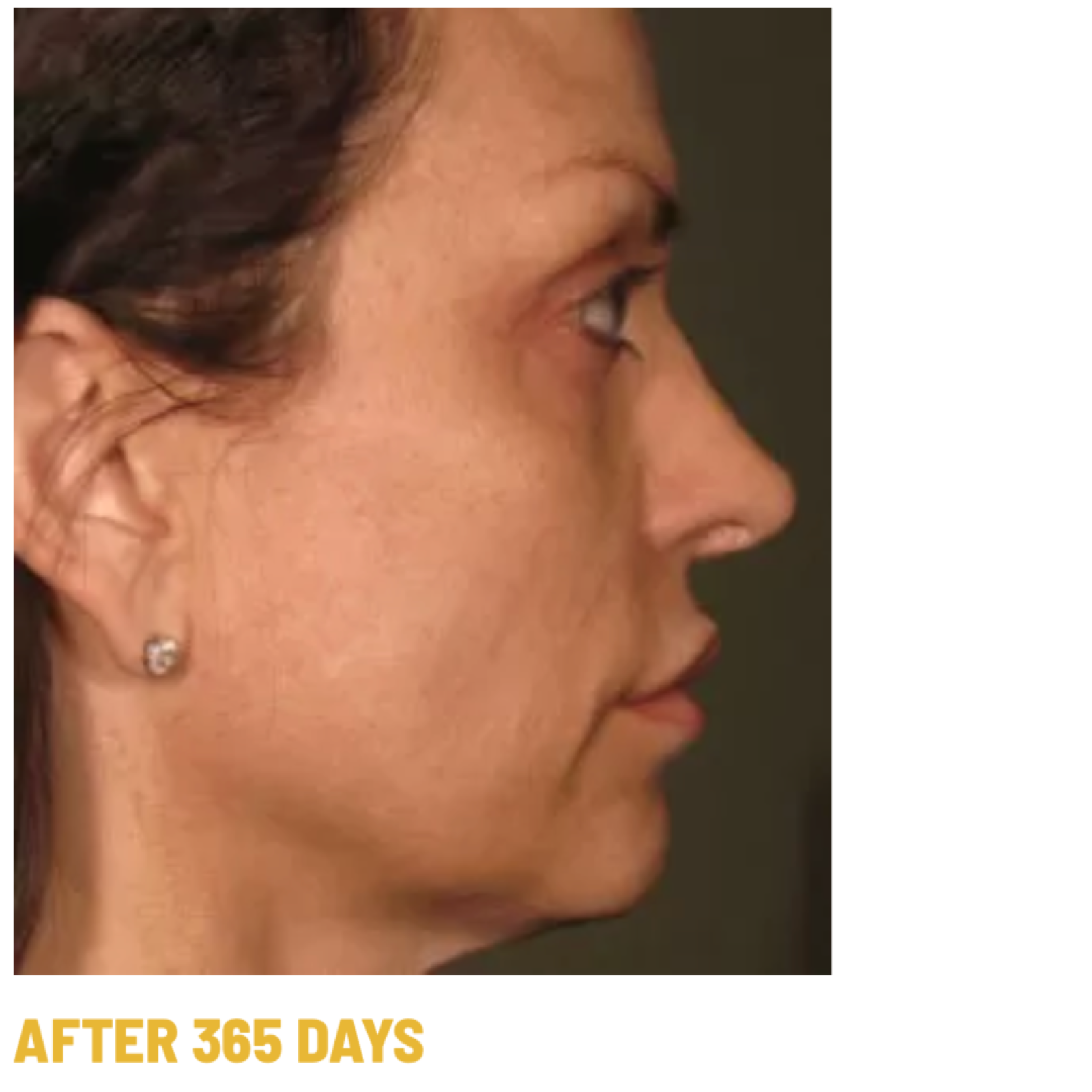
A single Ultherapy treatment session can produce significant lifting and tightening of the face and neck, with results visible in around three months. Skin elasticity also improves significantly within twelve weeks, with 42% more collagen just four weeks after treatment. Most patients can return to their usual day-to-day life immediately after their appointment.
What to Expect
Each Ultherapy session takes between thirty and ninety minutes. The handpiece is glided across the treated area, with brief pulses of energy delivered at three depths. Sensation is often described as heat or prickling. Some patients find this uncomfortable, and pain management options are discussed at consultation.
Safety and Side Effects
Ultherapy is FDA-cleared, CE-marked and has an established clinical safety profile across more than four million treatments in over 80 countries. Common side effects are short-lived flushing, mild swelling or tenderness in the treated area. Rarer effects include transient nerve effects or bruising, which typically resolve without intervention.
Aftercare
There is no planned downtime after an Ultherapy session, and normal activities can resume immediately. Skin may feel warm or tender for a few hours. Continue with your usual skincare routine including SPF and give the collagen renewal process time; the full result will emerge gradually over the following three months.